.png)
Why More Hospitals Are Turning to Mobile and Relocatable Imaging Solutions
Across Europe, healthcare providers face a common challenge: delivering high-quality diagnostic imaging and interventional services while managing financial pressures, operational complexity and changing demand.
While medical imaging technology continues to evolve rapidly, hospital infrastructure does not always move at the same pace. Adapting existing clinical spaces for new MRI, CT or interventional equipment can involve significant construction, cost, planning and disruption. In many projects, preparing the space can be as challenging as installing the equipment itself.
These pressures are driving greater interest in mobile and relocatable imaging solutions. Once viewed primarily as temporary alternatives, these flexible approaches are increasingly being considered as part of longer-term strategies to expand capacity, maintain continuity of care and give healthcare providers greater flexibility.
The growing adoption of flexible imaging solutions across Europe
Across Europe, healthcare providers are increasingly exploring mobile and relocatable imaging solutions as part of their capacity planning, as health systems look for more flexible ways to expand capacity, manage infrastructure constraints and bring diagnostic services closer to patients.
This includes MRI, CT, mammography and digital X-ray, as well as relocatable facilities for cardiac and vascular interventional procedures.
These solutions are no longer being considered only as short-term options during equipment replacement or refurbishment. Increasingly, healthcare providers are looking at flexible imaging capacity as a way to expand services, manage infrastructure constraints and respond more effectively to changing demand.
The drivers behind mobile and relocatable imaging
1. Hospital construction can be a major cost and time driver
When hospitals plan for a new MRI, CT or Cath Lab, the focus naturally falls on the medical equipment. However, preparing the surrounding clinical environment can be just as significant.
Structural adaptations such as reinforcement, shielding, HVAC, electrical work, equipment access, fire safety measures and renovation can add substantial cost and time to an imaging project.
In complex or space-constrained hospitals, infrastructure preparation can represent a significant proportion of the overall project cost and programme.
Planning can also involve multiple stakeholders and approvals, including permits, funding, tenders, IT integration, estates teams and clinical requirements.
In some hospital environments, simply gaining access to remove or replace imaging equipment can itself become a major engineering project. This is particularly relevant in older or densely developed hospital estates where access routes were not designed around the size and complexity of modern imaging systems.
Mobile and relocatable solutions can provide an alternative approach by reducing the need for major internal construction and creating additional capacity outside the existing hospital footprint.
2. Flexible imaging capacity is becoming a strategic requirement
Patient demand, staffing availability and healthcare needs can change quickly, making it increasingly difficult for hospitals to predict capacity requirements years in advance.
In some healthcare markets, growing diagnostic waiting lists are also creating an immediate need for additional imaging capacity. This is particularly evident in the UK, where reducing diagnostic waits and increasing elective activity remain major priorities.
As a result, mobile and relocatable imaging solutions are increasingly being used not simply as temporary cover during equipment replacement or refurbishment, but as additional clinical capacity in their own right.
- Increase MRI and CT capacity to help address waiting lists
- Add capacity more quickly than may be possible through permanent construction
- Support elective recovery and increased diagnostic activity
- Deploy additional capacity at hospitals experiencing the greatest demand
- Move capacity between sites as requirements change
- Maintain services during construction or equipment replacement
- Respond to equipment failure, staffing pressures or unexpected disruption
For multi-site hospital groups and imaging networks, this creates the opportunity to treat imaging capacity as a flexible resource across the wider estate rather than something permanently tied to one location.
Agito Medical currently supports healthcare providers using mobile and relocatable imaging capacity across multiple hospital locations. These solutions are deployed not only for planned additional capacity and changing operational requirements, but also as part of established business-as-usual service models.
For some healthcare providers, mobile and relocatable imaging forms part of the standard way diagnostic services are delivered across their network, including at sites that do not have their own permanently installed MRI or CT scanners. This allows providers to extend access to imaging services across a wider geographic area while retaining the flexibility to adapt capacity as demand changes.
3. New applications for flexible imaging
Mobile and relocatable imaging solutions are increasingly being considered as part of longer-term capacity planning rather than simply as temporary replacements.
- Expanding MRI and CT capacity across multi-site healthcare networks
- Supporting community diagnostic services closer to patient populations
- Providing imaging capacity for screening programmes, including lung cancer screening
- Supporting waiting-list reduction and elective recovery programmes
- Providing business-as-usual imaging services at sites without permanently installed scanners
- Adding capacity during periods of increased demand
- Maintaining imaging services while permanent facilities are built or refurbished
- Providing relocatable Cath Lab capacity without the need for major permanent construction
- Providing additional resilience during equipment replacement programmes
Flexible imaging can also support a shift towards delivering more diagnostic care outside traditional acute hospital settings. Mobile and relocatable solutions can be deployed at community locations, diagnostic centres and other healthcare sites, helping providers bring imaging closer to patients without requiring permanent imaging infrastructure at every location.
This can be particularly relevant for high-volume screening and diagnostic programmes, where capacity may need to be deployed across different populations or locations over time.
When considered early in the planning process, flexible imaging solutions can give healthcare providers more options when balancing capacity, infrastructure, patient access, investment and disruption.
Mobile or relocatable: choosing the right imaging solution
Mobile and relocatable solutions can both provide additional imaging capacity, but they are designed for different types of requirement.
Mobile MRI and CT
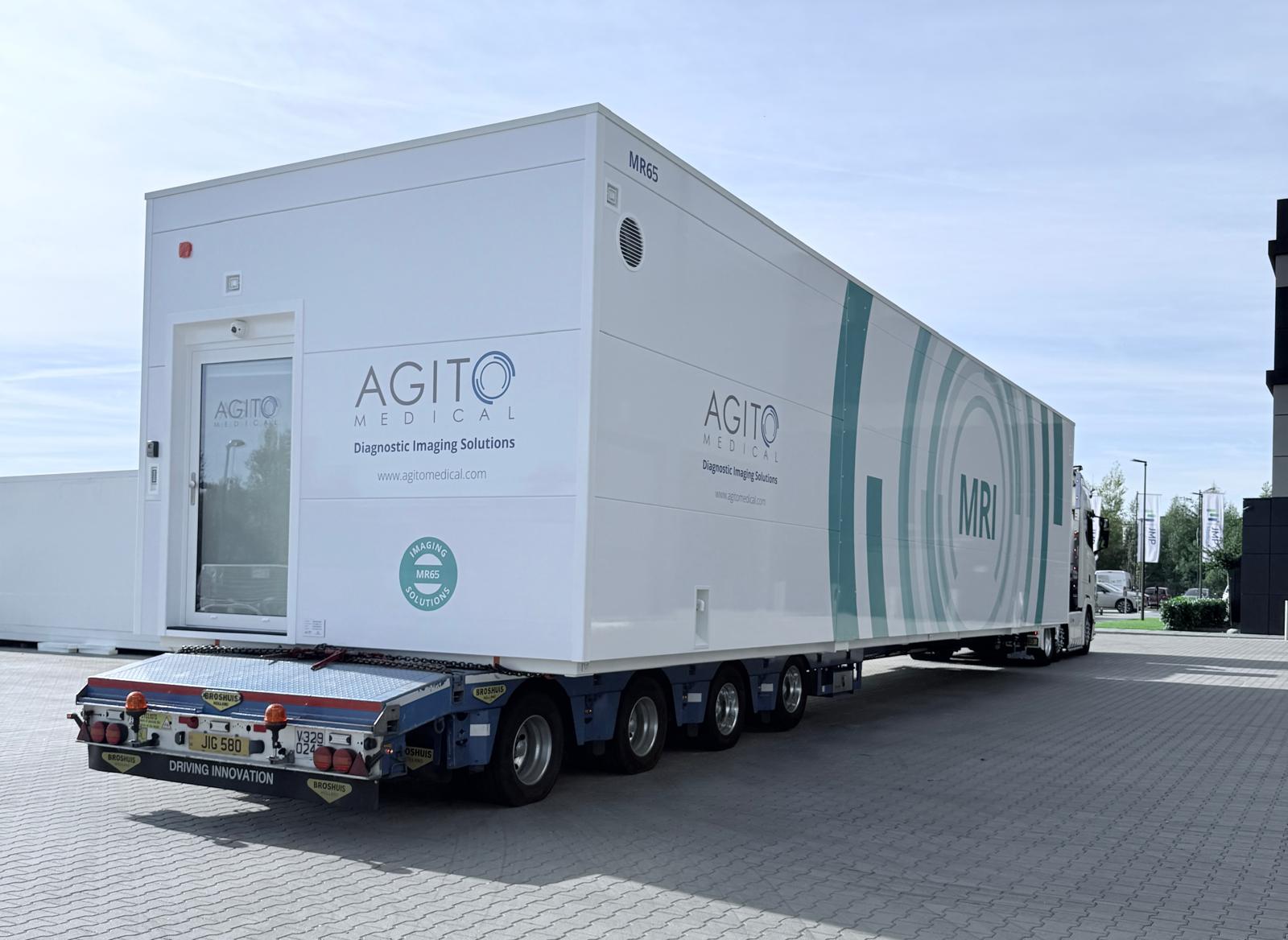
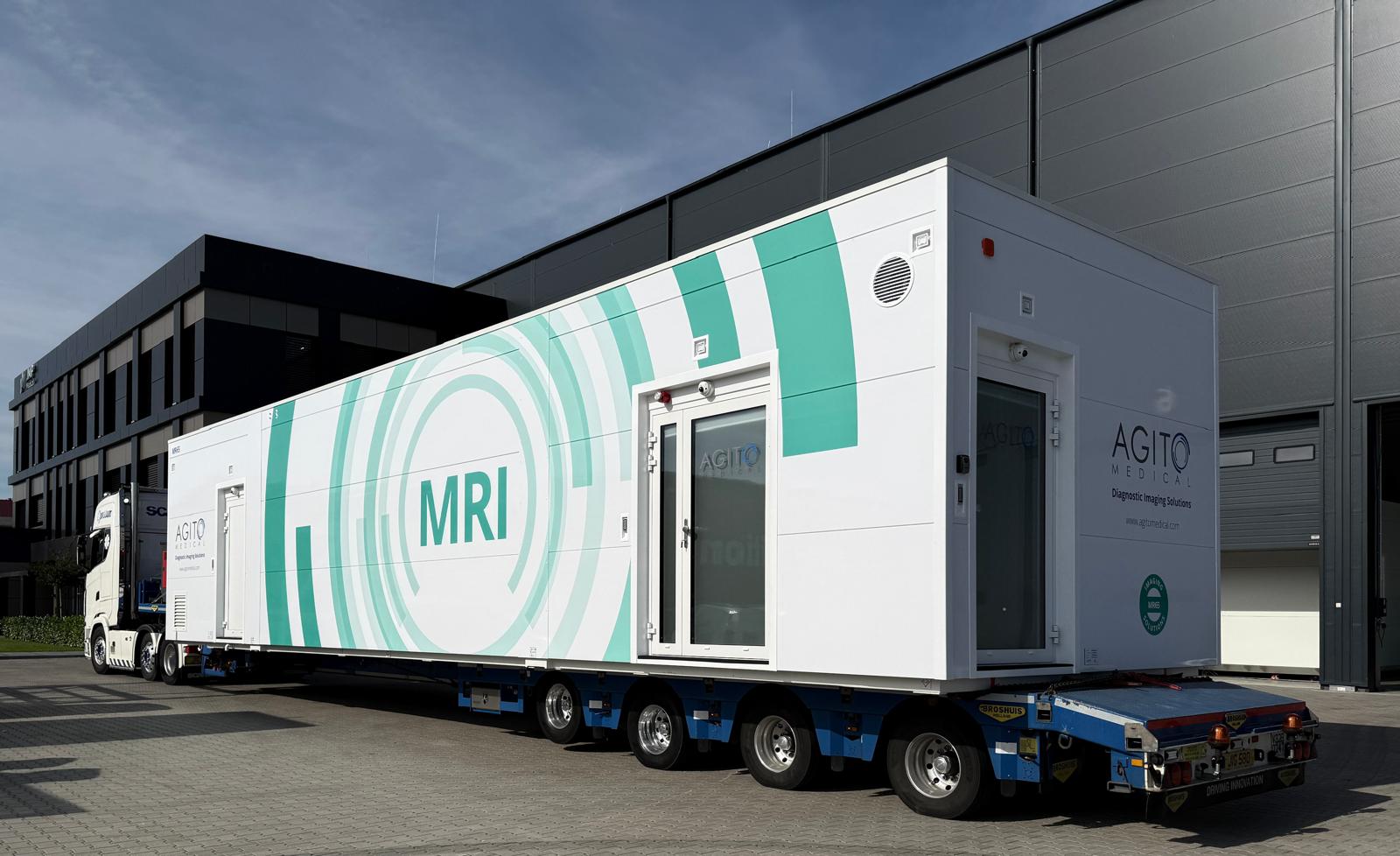
Mobile imaging units are typically trailer-based MRI or CT systems designed for rapid deployment and easy relocation.
They are particularly well suited to:
- Short-term or urgent capacity requirements
- Equipment replacement or breakdown cover
- Waiting-list support and additional diagnostic capacity
- Temporary increases in demand
- Screening and community programmes requiring capacity across different locations
- Business-as-usual imaging services across sites without permanent scanners
- Hospitals with limited available space or constraints within the existing estate
- Built-up urban locations where major construction or expansion may be difficult
- Sites where internal installation of additional imaging equipment would require significant structural work or disruption
- Projects where speed of deployment is a priority
Their main advantages are flexibility, relatively rapid mobilisation and the ability to add imaging capacity without necessarily requiring major changes to the existing hospital building.
This can be particularly valuable at space-constrained hospitals and in densely developed urban locations, where extending or reconfiguring the existing estate may be difficult, costly or disruptive.
Mobile units can also be relocated between sites as requirements change, making them suitable for healthcare providers looking to respond flexibly to changing demand across a wider network.
Relocatable MRI and CT
Relocatable imaging facilities provide a larger and more permanent-feeling clinical environment while retaining the ability to be moved and redeployed in the future.
They are particularly suited to mid- to long-term capacity requirements, where providers need more space, improved patient pathways and closer integration with the existing hospital environment than a mobile unit can typically provide.
Relocatable facilities can be particularly useful for planned capacity expansion, longer-term waiting-list programmes and sites where additional imaging capacity may be required for several years but permanent construction is not yet appropriate.
Relocatable Cath Labs
Cath Labs require specialist infrastructure, infection control measures, clinical equipment and carefully planned patient pathways.
Agito Medical’s relocatable Cath Lab solutions are designed to provide additional interventional capacity without necessarily requiring a major permanent construction project.
They can be particularly relevant where a healthcare provider needs to:
- Add interventional capacity quickly
- Maintain services during refurbishment or replacement
- Expand capacity where existing hospital space is constrained
- Avoid or defer major internal construction
- Create a high-quality clinical environment for mid- to long-term use
A relocatable Cath Lab can provide a more substantial and integrated environment than a mobile solution while retaining the flexibility to be moved or redeployed in the future.
In simple terms, the spectrum moves from mobile for rapid and highly flexible deployment to relocatable for more substantial mid- to long-term clinical capacity.
The right solution depends on the clinical requirement, site, timeframe, patient pathway, capacity need and long-term strategy.
Preparing hospitals for mobile and relocatable imaging
Dedicated imaging pads: small preparation, big impact
One way hospitals can make mobile and relocatable imaging easier to deploy is by creating a dedicated imaging pad with the key infrastructure already in place.
- A suitable hardstanding area for the unit
- Pre-installed power supply
- IT and network connections
- Water and drainage where required
- Safe and accessible patient routes
- Direct or covered access to the relevant hospital department
- Sufficient space for delivery, positioning and servicing of the unit
Having this infrastructure prepared in advance can significantly reduce the time and disruption involved in deploying additional imaging capacity.
It can also make future equipment replacement, temporary capacity and recurring mobile imaging services easier to manage, giving hospitals aready-made location that can be used whenever additional capacity is required.
Why flexible imaging matters now
- Growing diagnostic demand and waiting-list pressures in certain healthcare markets
- Pressure to increase elective and diagnostic activity
- Expansion of community diagnostic and screening programmes
- Increasing use of flexible imaging as part of established service delivery model
- Financial pressure across healthcare systems
- Demographic change
- Staffing shortages
- Long construction and approval timelines
- Lead times for new imaging equipment
- Ageing and space-constrained hospital estates
- Limited expansion options indensely developed urban locations
- Increasing operational uncertainty
For healthcare providers, mobile and relocatable imaging is therefore no longer simply a workaround for temporary problems.
It can form part of a wider strategy for managing capacity, infrastructure and long-term investment - and, in some cases, form part of the standard model for delivering imaging services across a network.
The strategic benefits of mobile and relocatable imaging
Healthcare providers that consider flexible infrastructure early in their planning may benefit from:
- Reduced reliance on major internal construction
- Less disruption during equipment replacement
- Continuity of care during renovations
- Additional capacity to support waiting-list reduction
- Greater ability to deliver diagnostics closer to patient populations
- Increased flexibility to support screening and community programmes
- The ability to provide imaging services at sites without permanently installed scanners
- A practical long-term solution where there is limited or no room to expand within the existing hospital building
- The option to use mobile or relocatable imaging as an established business-as-usual model for delivering long-term capacity
- Greater resilience to changing staffing and demand
- Faster and more flexible capacity management
- Additional options for space-constrained and densely developed hospital sites
- Increased flexibility across clinical services
- The ability to redeploy capacity as requirements change
For many healthcare providers, mobile and relocatable imaging is simply another way of delivering imaging capacity. It does not have to be viewed as a temporary or unusual solution.
Where demand is sustained, hospital space is limited or services need to be delivered across several locations, mobile and relocatable imaging can form part of the normal long-term operating model.
With the right planning and experienced support, deployment can also be straightforward.
How Agito Medical supports flexible imaging
Flexible imaging is about more than providing a piece of equipment. The right solution needs to bring together the imaging system, the mobile or relocatable facility, the hospital site, infrastructure, patient pathway and operational requirements. Agito Medical works with healthcare providers to understand the requirement first and then identify the right solution - from selecting the appropriate MRI, CT or interventional system through to determining whether a mobile or relocatable configuration is the best fit.
- Rasmus Jakobsen, Key Account Manager for Agito Medical Imaging Solutions.
Agito can support the project from initial planning through to delivery and handover, including:
- Site visits and technical assessments
- Selecting the appropriate imaging system and solution
- Site and access planning
- Power, IT and infrastructure requirements
- Patient pathway considerations
- Delivery and positioning of the unit
- Installation and system set-up
- Testing, commissioning and handover
- Ongoing technical and operational support
This end-to-end approach helps make the process of adding mobile or relocatable imaging capacity clear and manageable, with Agito coordinating the practical requirements from initial assessment through to bringing the solution into operation.
In certain regions, Agito Medical can also provide staffed clinical services alongside the imaging solution, giving healthcare providers the option of accessing not only additional equipment and infrastructure, but also the clinical resource required to operate the service.
This means the conversation does not have to begin with a particular scanner or unit. It can begin with the healthcare provider’s capacity challenge, clinical requirement or service objective, with Agito helping to determine the most appropriate way to deliver it.
For some providers this may mean rapid mobile capacity. For others it may be a relocatable facility supporting a site for several years, a community or screening service, or a business-as-usual model operating across multiple locations.
By bringing together equipment, infrastructure, project managementand, where required and available, clinical staffing, Agito Medical can support the complete pathway from identifying the right solution to bringing it into operation.
As healthcare needs continue to evolve, mobile and relocatable imaging can play an increasingly important role in creating resilient, adaptable imaging capacity and bringing diagnostic services closer to the patients who need them.